
Industrial Noise Barrier for Metal Shredder and Downstream Equipment

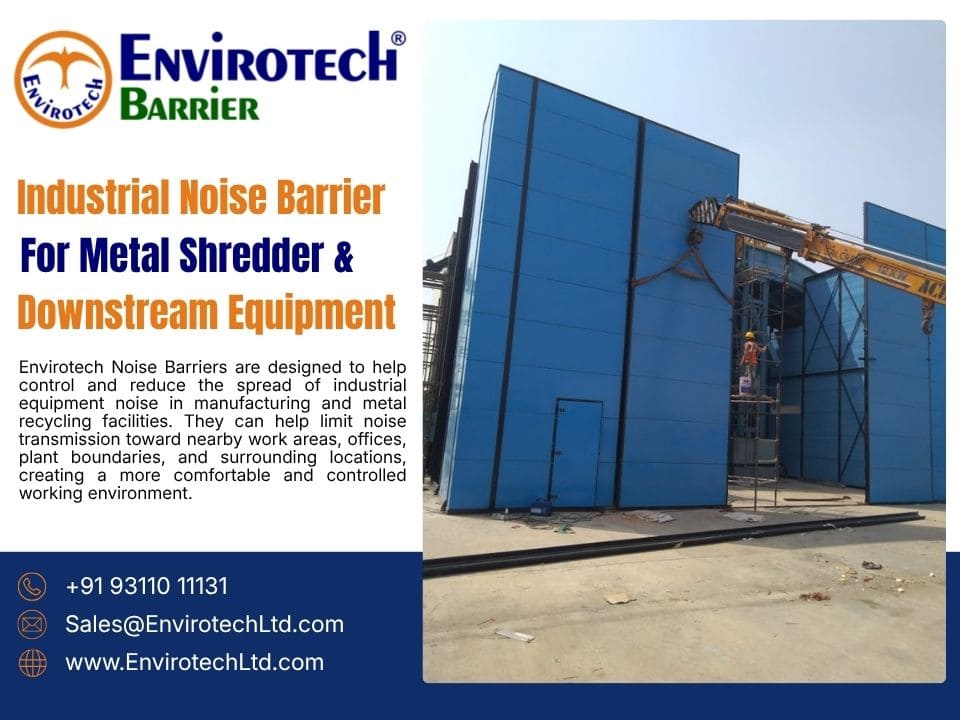
Envirotech Noise Barriers are designed to help control and reduce the spread of industrial equipment noise in manufacturing and metal recycling facilities. They can help limit noise transmission toward nearby work areas, offices, plant boundaries, and surrounding locations, creating a more comfortable and controlled working environment.
Envirotech Systems Limited provides engineered acoustic solutions, including customized industrial noise barriers for metal shredders, crushers, conveyors, screens, and other downstream equipment.
Each noise barrier system can be designed according to the machine configuration, site conditions, available space, installation requirements, and project-specific acoustic objectives. This supports effective noise management for demanding industrial applications.
What Is an Industrial Noise Barrier?
An industrial noise barrier is a specially engineered structure positioned between a noise-generating machine and the area requiring protection. It creates an acoustic obstruction that interrupts the direct path through which airborne sound travels.
Unlike a conventional partition, an industrial acoustic barrier is designed with consideration for sound transmission, reflection, absorption, structural requirements, and the operating environment.
Depending on the application, barriers may be installed:
- Around selected industrial machines
- Between equipment and occupied areas
- Along factory or plant boundaries
- Around high-noise processing zones
- Between primary and downstream machinery
- As part of a larger industrial acoustic-control system
For metal-processing facilities, the barrier design should also consider machine access, maintenance, material flow, ventilation, safety clearances, and plant movement.
Why Do Metal Shredders Generate High Noise Levels?
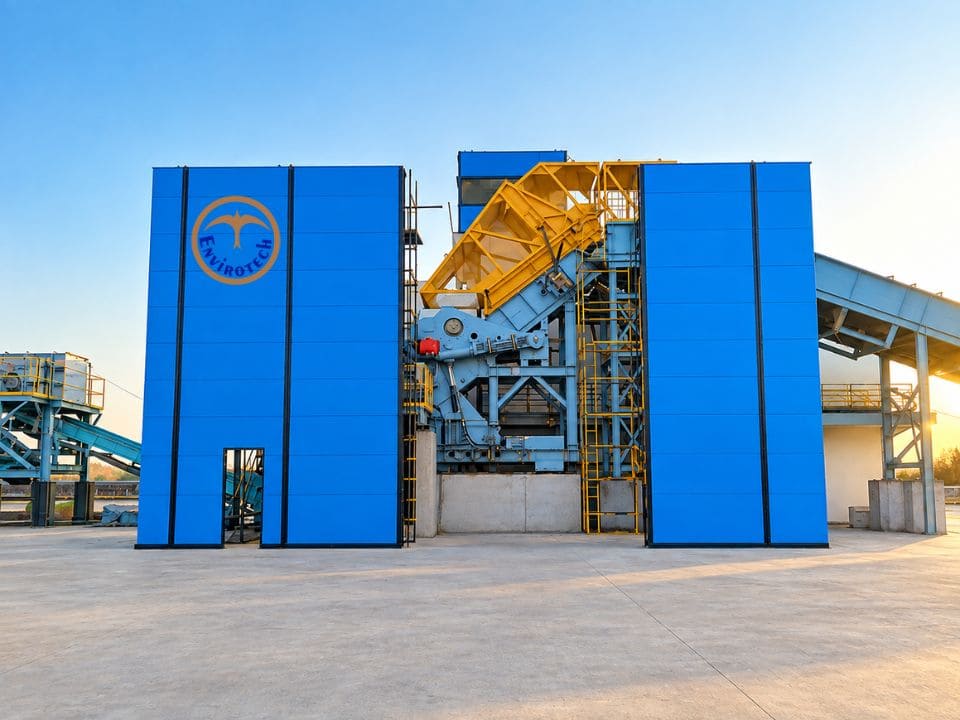
Metal shredding is a high-energy mechanical process. During operation, scrap metal is subjected to cutting, breaking, impact, crushing, and other mechanical forces. These activities can create a combination of airborne and vibration-related noise.
Noise may also come from:
- Material feeding
- Metal impact
- Rotating machinery
- Vibrations
- Discharge operations
- Connected conveyors
- Supporting processing equipment
Because shredders often operate as part of a complete processing line, the total acoustic environment can be influenced by several machines operating simultaneously.
A properly positioned metal shredder noise barrier can help interrupt the direct transmission path between the equipment and selected receiving areas.
Industrial Noise Control for Downstream Equipment
- Noise management should not focus only on the main shredder. After shredding, material commonly passes through several processing stages, and each machine can contribute to the overall sound level.
- Examples include vibratory screens, conveyors, crushers, magnetic separators, air classifiers, compactors, granulators, and other downstream machinery.
- A coordinated industrial noise-control solution can address these sources individually or collectively, depending on the plant layout and acoustic requirements.
- For example, a barrier may be positioned around a high-noise processing section while leaving sufficient space for conveyors and maintenance activities. In another application, several barriers may be integrated into a larger acoustic treatment system.
How Does a Noise Barrier Work?
- The basic principle of an acoustic barrier is to obstruct the direct path between a sound source and a receiver.
- When sound encounters the barrier, the direct transmission path is interrupted. Sound can still travel around the edges of the barrier, so the dimensions and positioning of the structure are important.
- Barrier Height: The height should be determined according to the location of the noise source and the area requiring protection. A properly planned height can help block the direct line of sight between the machine and receiver.
- Barrier Length: The barrier should be sufficiently extended around the relevant noise source to reduce sound travelling around its sides. Open gaps can compromise the overall acoustic performance.
- Acoustic Construction: Panel construction and surface treatment influence how the barrier interacts with sound. Where required, sound-absorbing surfaces can be incorporated to help manage reflected sound within the industrial area.
- Installation Position: The relationship between the machine, acoustic barrier, and receiving location is an important part of the design. The available space, equipment movement, access routes, and maintenance requirements should also be considered.
Features of Industrial Acoustic Barriers
A customized industrial noise barrier may include several features depending on the application and environment:
- Robust industrial construction
- Acoustic sound-absorbing surfaces
- Modular panel systems
- Project-specific dimensions
- Structural support arrangements
- Weather-suitable construction for outdoor installations
- Maintenance access provisions
- Integration with existing structures
- Consideration of ventilation requirements
- Compatibility with plant movement and material handling
The final specification should be determined according to the application, environmental conditions, machinery, and required acoustic performance.
Benefits of Noise Barriers for Metal Recycling Plants
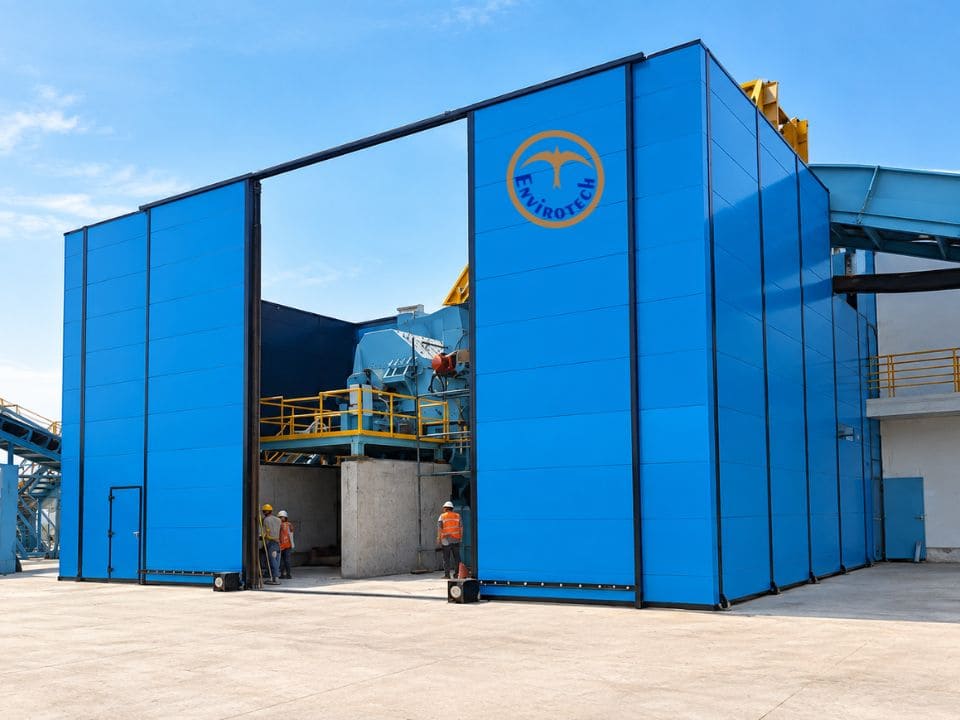
A suitably engineered noise barrier for a metal shredder can form an important part of a broader industrial acoustic strategy.
- Helps Control Noise Propagation: A barrier can interrupt the direct path of airborne noise and help restrict its propagation toward selected areas.
- Creates a More Controlled Acoustic Environment: Reducing direct sound transmission can contribute to better acoustic conditions around work areas and other occupied locations.
- Helps Manage Reflected Sound: Where sound-absorbing materials are incorporated, the barrier can also help manage reflections from hard surfaces commonly found in industrial facilities.
- Supports Plant-Specific Requirements: Custom barrier systems can be designed around equipment, walkways, maintenance zones, material-handling routes, and existing structures.
- Suitable for Different Industrial Applications: Acoustic barriers can be developed for indoor, semi-outdoor, and suitable outdoor industrial environments depending on construction and site conditions.
Applications of Industrial Noise Barriers
Industrial Acoustic Barriers may be used in many high-noise industries and processing facilities, including:
- Metal recycling plants
- Scrap processing units
- Steel manufacturing facilities
- Automotive recycling plants
- Waste processing facilities
- Material recovery plants
- Heavy engineering industries
- Manufacturing facilities
- Crusher and screening plants
- Industrial production areas
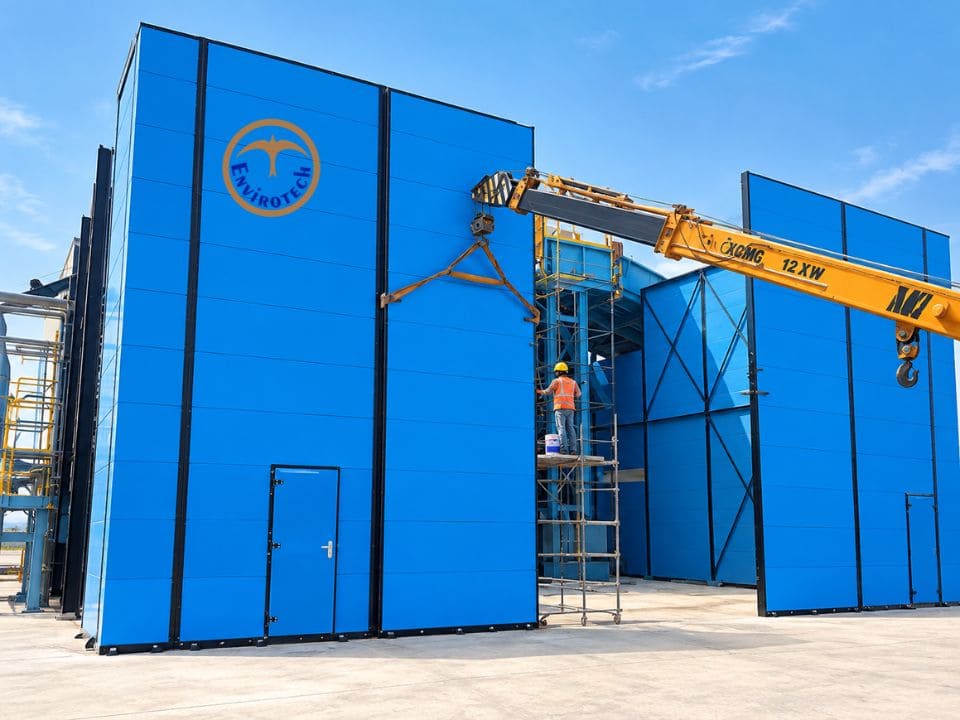
The appropriate noise-control method depends on the machinery, acoustic environment, site layout, and project requirements.
Customized Industrial Noise Barrier Solutions by Envirotech
No two industrial plants have the same noise-control requirements. Equipment sizes, machine locations, production processes, building structures, access routes, and surrounding areas can vary significantly.
Envirotech Systems Limited develops customized acoustic solutions based on the conditions of each project.
Important design considerations can include:
- Noise-source location
- Machinery dimensions
- Operating conditions
- Frequency characteristics
- Barrier height and length
- Source-to-receiver distance
- Existing buildings and structures
- Maintenance access
- Ventilation requirements
- Material transportation routes
- Indoor or outdoor installation
- Required acoustic performance
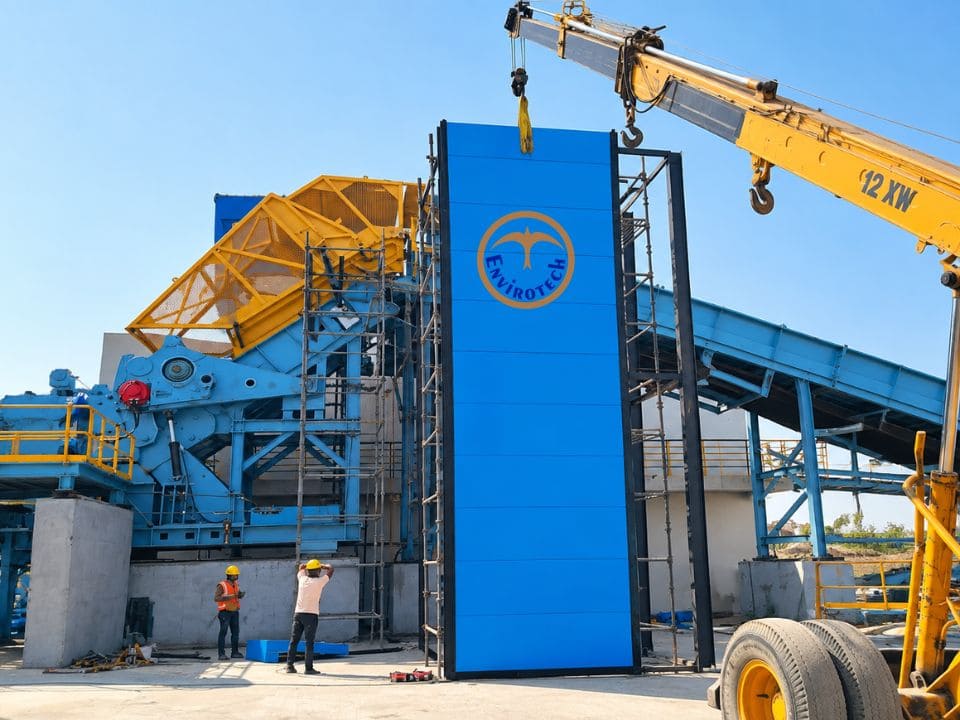
For complex applications, an acoustic assessment can help determine the appropriate combination of barriers, enclosures, absorptive treatments, and other engineering controls.
Industrial Acoustic Solutions for Metal Processing Facilities
A complete noise-control strategy may require more than one acoustic treatment. Depending on the application, industrial barriers can be combined with acoustic enclosures, acoustic panels, doors, partitions, or other sound-control systems.
This integrated approach can be useful where several machines operate within the same production area.
Envirotech Systems Limited focuses on developing practical acoustic solutions that can be incorporated into existing industrial operations while considering accessibility, maintenance, production requirements, and site limitations.
Why Choose Envirotech Systems Limited?
Envirotech Systems Limited specializes in engineered acoustic and noise-control solutions for industrial and commercial applications.
For metal shredding and recycling facilities, the company can develop customized solutions based on the characteristics of the machinery and the surrounding environment.
The objective is to provide an acoustic system that addresses the specific noise-control challenge while maintaining practical considerations such as access, maintenance, installation, and plant operations.
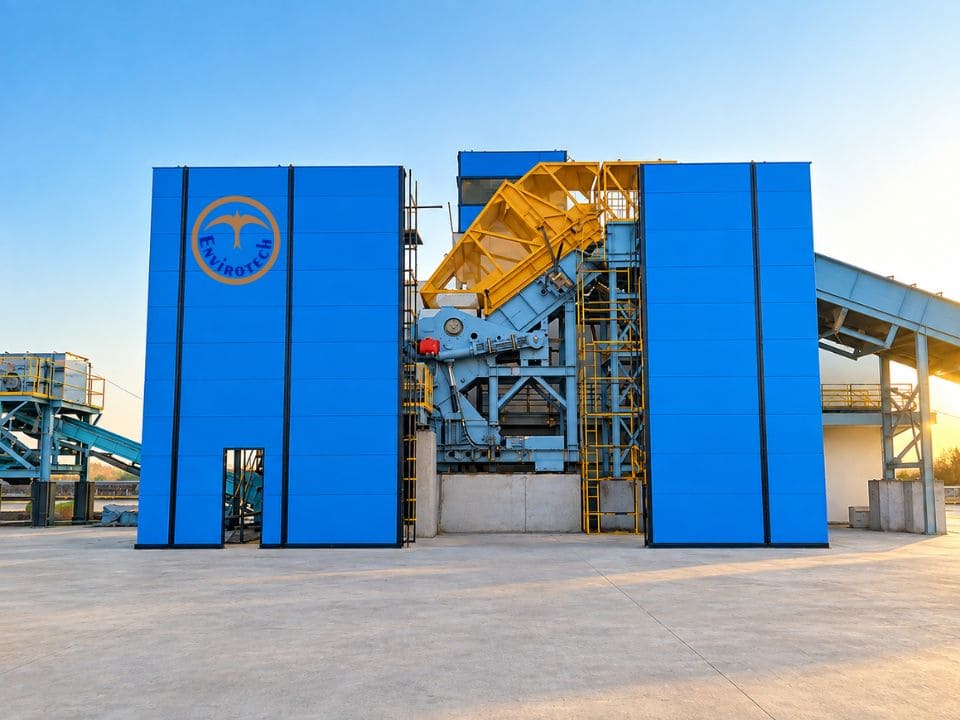
Industrial Noise Barrier Manufacturer
Industrial Noise Barrier Manufacturers for metal shredders and downstream processing equipment are essential for modern scrap and recycling operations, but their high-energy mechanical processes can create challenging industrial noise conditions.
An appropriately designed industrial noise barrier for metal shredders and downstream equipment can help interrupt direct sound transmission and contribute to a more controlled acoustic environment.
The effectiveness of a barrier depends on its construction, dimensions, positioning, the characteristics of the noise source, and the relationship between the source and receiving area.
Envirotech Systems Limited provides customized industrial acoustic solutions for metal recycling plants, manufacturing facilities, processing industries, and other high-noise applications. Project-specific engineering can help identify suitable acoustic barrier configurations according to the operational and site requirements.