
Noise Barrier Solutions Controlling Urban Sound Pollution

Rapid urban growth has increased transportation networks, industrial zones, and construction activities — but it has also created a serious environmental issue: noise pollution. Continuous exposure to loud sound from traffic, railway movement, and heavy machinery can disturb sleep, reduce productivity, and impact long-term health. To solve this challenge, engineered Noise Barrier systems are installed to block and absorb unwanted sound before it reaches people.
As an experienced acoustic solution provider, Envirotech Systems Limited develops specialized barrier systems designed to reduce noise levels while ensuring structural safety and aesthetic appeal.
Understanding How a Noise Barrier Works
Envirotech Noise Barrier is a physical acoustic wall placed between the sound source and the receiver. Instead of allowing sound waves to travel directly to nearby buildings, the barrier interrupts the path of sound energy.
The effectiveness of a barrier depends on:
- Height relative to noise source
- Distance from receiver
- Material absorption capability
- Surface density and sealing
- Structural positioning
Acoustic barriers function through three sound-control methods:
- Blocking – Stops direct sound transmission
- Absorbing – Converts sound energy into heat inside insulation
- Redirecting – Deflects sound upward or away from populated areas
When designed properly, a barrier can significantly lower perceived sound levels and improve living conditions.
Metallic Noise Barrier – Strength with Performance
Envirotech Metallic Noise Barrier is commonly used in infrastructure and industrial applications because of its durability and high acoustic efficiency. These panels are typically made of galvanized steel or aluminium sheets combined with mineral wool insulation. Metallic barriers are especially useful in areas exposed to harsh weather and heavy vibration because they maintain performance over decades without structural degradation.
Polycarbonate Noise Barrier – Visibility with Silence
In urban environments, infrastructure must reduce sound without blocking light or city views. A Polycarbonate Noise Barrier addresses this requirement. These barriers use transparent UV-protected sheets combined with acoustic backing. Polycarbonate barriers help maintain openness while still controlling sound, making them suitable for densely populated urban regions.
Road Noise Barrier
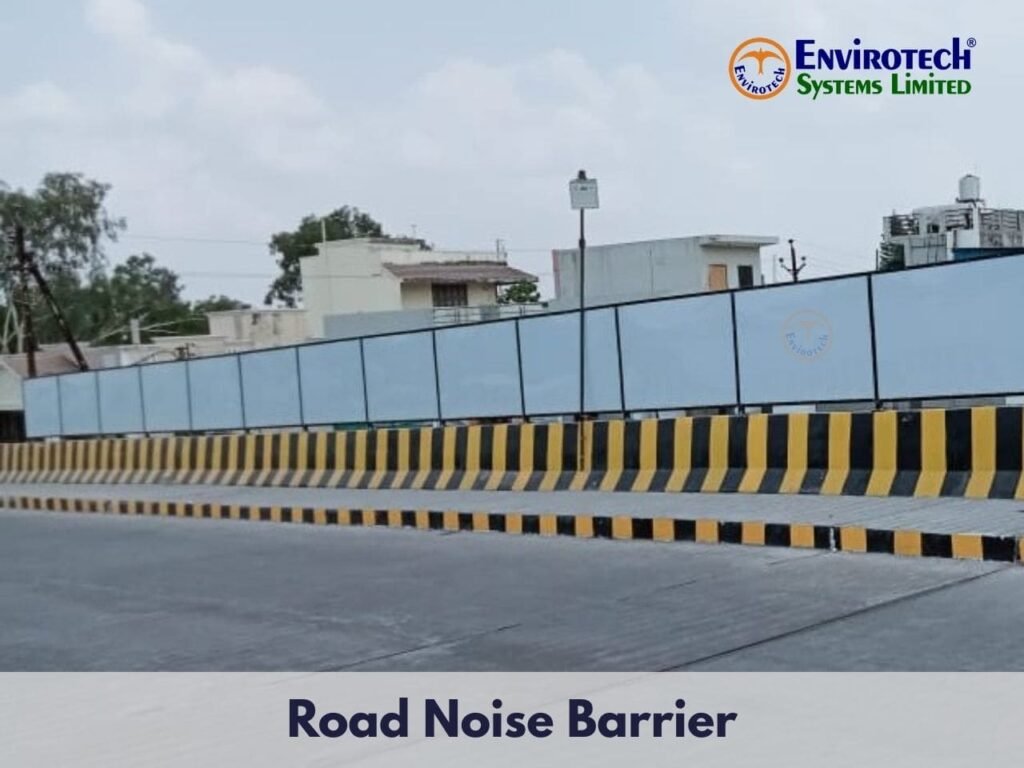
A Road Noise Barrier is a specially designed wall or panel system installed along highways, expressways, flyovers, rail corridors, or busy urban roads to reduce unwanted traffic noise reaching nearby homes, offices, schools, and hospitals. Urban cities and highways passing through residential areas now require noise mitigation as per environmental norms.
Railway Noise Barrier
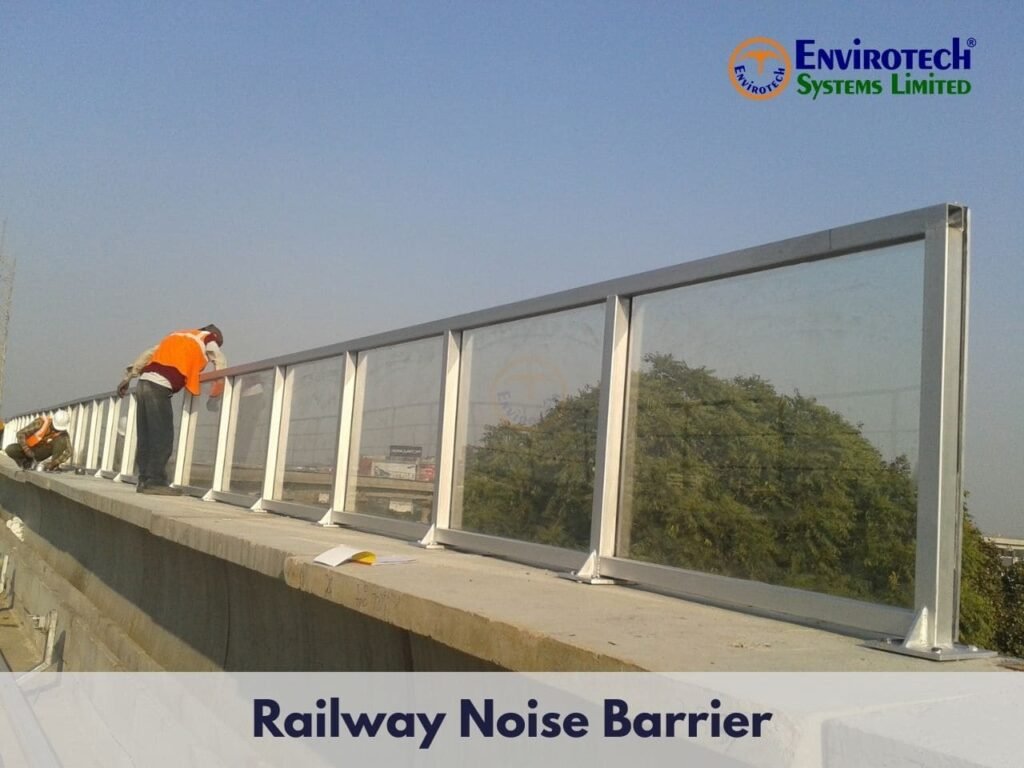
Envirotech Railway Noise Barrier is a specially engineered acoustic wall installed along railway tracks to reduce the noise generated by moving trains. With growing urbanization and metro expansion, railway lines now pass very close to residential areas, hospitals, schools, and commercial complexes.
Railway expansion is essential for modern cities, but uncontrolled noise creates serious environmental impact. Installing properly engineered railway noise barriers is the most effective and permanent solution. Whether metallic, transparent, or hybrid, these acoustic systems significantly improve quality of life for communities living near rail corridors while maintaining operational safety for railway authorities.
Continuous exposure to train noise — wheel-rail friction, horn sound, braking squeal, and vibration — can lead to serious disturbance and health issues. Railway acoustic barriers act as a protective shield that blocks, absorbs, and deflects sound waves before they reach nearby buildings.
Noise Barrier Manufacturer
Urban infrastructure development must include environmental responsibility. Installing a well-engineered Noise Barrier system protects communities from harmful sound exposure while maintaining modern city aesthetics. Whether it is a Road Noise Barrier along highways or a Railway Noise Barrier near transit corridors, effective sound control improves quality of life. Even a reduction of 10–15 decibels can dramatically improve human perception of loudness, making surroundings noticeably quieter.
Durable Metallic Noise Barrier solutions provide strength and long-term reliability, while Polycarbonate Noise Barrier systems offer transparency and architectural harmony. Together, these technologies ensure quieter and healthier environments for future cities. As urban expansion continues, integrating acoustic engineering into project planning will remain essential for sustainable development and human well-being.